- Put on your openings and endings
- Reference your images
- Put your your transitions
- Have to have two world theatres (Andong, Commedia)
- What you've learned through your experiences
- Put in quotes
- Make references to practitioners
- Analysis, synthesis, action, research
Tuesday, 19 November 2013
TPPP Notes - make changes

Monday, 18 November 2013
Notes from the class I missed today
- lighting switches written in
- theatre in the round
- torture scene behind a scrim
- indoctrination
- culture shock; juxtaposition or a comparison?
- Joe's one-track mind
- overlap of dialogue; conversational and quick-paced
- red; perhaps adopt two different colors for the countries; blend into one later?
- many film elements to be incorporated
- age limit; censorship of language?
- politics; role of media in politics
- role media embedded in the situation; is it possible to truly understand the struggles of the people within it? (Black Watch)
- theatre in the round
- torture scene behind a scrim
- indoctrination
- culture shock; juxtaposition or a comparison?
- Joe's one-track mind
- overlap of dialogue; conversational and quick-paced
- red; perhaps adopt two different colors for the countries; blend into one later?
- many film elements to be incorporated
- age limit; censorship of language?
- politics; role of media in politics
- role media embedded in the situation; is it possible to truly understand the struggles of the people within it? (Black Watch)
Wednesday, 13 November 2013
Notes
- environmental facts
- geographical location
- environmental facts-condition, place, time
- date-year, time, season, time of day
- economic environment-class level, state of wealth or poverty
- political environment-conservative, liberal, undecided
- social environment-smores
- in media res- in the middle of
- what the audience is told happened before the present action started
- "To the director, there is never any dull exposition but only a recalling of the past under the excitement and tension of active engagement..."
- Polar attitudes
- where a character begins and then ends up at the end of the play
- relationship
- objective
- obstacle
- strategy
- tactics
- text
- subtext
- interior monologue
- evaluation
- beats/beat challenges/units
TPPP Script
City lights
I fall in love with city lights all the time especially at night. Similar to the bright and colourful lights shining upon the different glass buildings, I find that stage lights have the same effect on me. Like a moth, I seem to zone out while looking into the light(s). I love the way that my eyes glaze over and I seem to daze off into my imaginations. It also helps me remember my lines when I look up into the lights on stage. My infatuation with the city lights came from what a friend had told me once. What he said, I translated into thinking that the only way for you to fully engross yourself into your character, would be if you were to were to look up at the light, and let it clear everything out of your head.
Good Soul Of Szechuan:
This was the first play where I felt truly free on stage. I think that this was the first play where I started out method acting as well. Method acting to me seems to be the only acting that can help the actor make it seem realistic for the audience. Believing that the things your character is going through is real, you yourself are forced to think like your character does on stage. I think there's a big psychological element to this as well. In the movie One Flew Over The Cuckoo's Nest, the director required the whole crew to stay in the insane asylum for the duration of filming. Some of the crew became a little bit crazy. To me, it's an art form. To me, it's a beautiful thing.
Antonin Artaud
I fall in love with city lights all the time especially at night. Similar to the bright and colourful lights shining upon the different glass buildings, I find that stage lights have the same effect on me. Like a moth, I seem to zone out while looking into the light(s). I love the way that my eyes glaze over and I seem to daze off into my imaginations. It also helps me remember my lines when I look up into the lights on stage. My infatuation with the city lights came from what a friend had told me once. What he said, I translated into thinking that the only way for you to fully engross yourself into your character, would be if you were to were to look up at the light, and let it clear everything out of your head.
Good Soul Of Szechuan:
This was the first play where I felt truly free on stage. I think that this was the first play where I started out method acting as well. Method acting to me seems to be the only acting that can help the actor make it seem realistic for the audience. Believing that the things your character is going through is real, you yourself are forced to think like your character does on stage. I think there's a big psychological element to this as well. In the movie One Flew Over The Cuckoo's Nest, the director required the whole crew to stay in the insane asylum for the duration of filming. Some of the crew became a little bit crazy. To me, it's an art form. To me, it's a beautiful thing.
Stage:
I look at the stage as being a big blank canvas (even with the set pieces on it). It's a small piece of imagination that humans have put together, through the vision and creativity of the many involved with a production. Something that I've always loved about theatre and film, is that it's a piece of imagination. Scientists can't see into your dreams, or your creative mind but through theatre/film, you can.
Andong:
I went to Andong along with my theatre class in order to see 'Talchum.' A traditional Korean form of Mask Dancing originating from ancient times.
It was here where I found myself falling in love with the nature around me. I'm not a flower type of person, but if I've ever felt close to nature, it was here. Along with the dancing, I felt at peace with myself. The music that went along with the nature and dance that I was seeing and feeling around me made this an unforgettable experience.
This is just one of the many masks that we had seen on the trip, and technically, I think that it is the best out of all the fourteen traditional masks that there are. I love how with this mask, the mouthpiece moves according to however the user moves it. Looking up to look happy, and looking down the look mad. The number of wrinkles on each side of the mask having a specific meaning to it also gives me the influence that I would need in order to wake up one night from a dream and make some of my own masks (what the young boy had done).
What really gives me the creeps about the mask though, is how spirits travel all the way from the top of a mountain just to reanimate themselves into one of the actor's bodies. I mean, the faces are already there to control the facial expressions of the actors, but to think that a spirit is actually controlling you like a puppeteer is truly remarkable. This kind of brings me back to what Mr. Hill had been talking about when people preform in acts with Butoh theatre. When people have to wake up the theatrical Gods around them in order for them to use the actor's bodies on stage.
The Last Days Of Judas Iscariot:
First production that had an actual emotional effect on me. It was from this play where I realised that theatre had a lot to offer. Much more than what I initially thought. There was a moment in this play where the whole cast had cried together at a certain scene. This was the scene where Jesus (my character) was trying to get Judas to accept his love again, thus ending his time suffering. It was the first time I ever saw a cast get so emotionally attached into the production that they themselves were involved in. This was a remarkable yet unsettling experience further making me question the things that art has to offer within human life.
First production that had an actual emotional effect on me. It was from this play where I realised that theatre had a lot to offer. Much more than what I initially thought. There was a moment in this play where the whole cast had cried together at a certain scene. This was the scene where Jesus (my character) was trying to get Judas to accept his love again, thus ending his time suffering. It was the first time I ever saw a cast get so emotionally attached into the production that they themselves were involved in. This was a remarkable yet unsettling experience further making me question the things that art has to offer within human life.
Mark Hill:
I'm not going to lie, I had my doubts at first. I thought that this wasn't going to be a pleasant week, seeing as the 'drama' class which I had once known had turned into some p.e class with a drop of artistic profanity in there. I thought "If this is a p.e class, why not just chuck away the artistic drama side of it?" How wrong could I have been?
The second day of Mr. Hill's lessons took me by surprise. It wasn't a p.e class anymore. His first intentions (I think) where to make us feel as if our second home was located in the Blackbox. This meant we had to find every aspect of the blackbox and make it ours by cleaning the floors. Each and every stroke of the watered-down towel scrub felt more and more as if we actually cared about the ground we were going to practice our physcial theatre. Suddenly the ground wasn't just a black surface anymore, it was an entire canvas awaiting to be painted by each of the strokes of our limbs. In a way, I thought that we were painting ourselves down in the blackbox through the use of dynamic stillness, levels of energy and how each and every one of us interacted with each other. Mark had told us about the time where he had to practice with people in nothing but a shack, but I guess that's theatre.
This is Mark Hill. One can see how much energy he puts when on-stage by looking at the veins pulsing from his neck. How his arm is so charismatic the way it just sits there with his fingers positioned in such a way, that you feel as if he's trying to grab at you. In this one photo, you can see so much about Mark Hill and to think, how much we've soaked up from him, considering the fact that we've had him for a whole week...
Mr. Hill always talks about energy levels and how you've got to keep them high, even when you're just standing there. He talks about how all this energy can induce so much synergy onto the stage with your cast members. Wherever you are on stage, whether your at a counterpoint up-close or maybe at a distance from the audience your energy level must be at least at a 5.
On the third day, we had talked about being physically aware when mimicking somebody as if you were their mirror. Mrs. Moon had gone through this with our class in a session as well. Mr. Hill had tried to test our focus, by making somebody ask you questions while you would mimic the other person.
What all of this has done for me as an actor:
First of all, now I really don't care how I look up on stage or if sweat is trickling down my face. I've learned that the audience love to see the actors struggle with their own problems when up on stage. It's interesting, and it will eventually show how much focus the actor has and how much pride the actor has for what he/she is aiming for in the play.
I've learned that acting is something that we can't learn through a teacher, or learn from a book. It's a mental challenge with yourself. Do you want to be you? Or do you want to make your body but a shell, so that the character's personality can use you as it pleases. In Butoh, you awake your theatrical 'Gods' by stomping on the floor and totally letting yourself go out towards the audience. This is an example of when we as actors need to make our bodies hollow and a shell that the spirits can use for that moment in time. In Butoh, you sweat yourself out making you vulnerable towards the audience. I think that when we sweat out, we're also releasing all the tension that we have, and our spirits for that moment, so that the theatrical spirits can help guide us through the performance.
Another thing that I've learned, is the meaning of what Mark Hill likes to say: "The best type of acting, is reacting." What does this mean? It means that the play can't just be about lines, or memorization of the script. It's how much focus the actor puts into the play and if he/she knows what's going on around them, in the story, and in each character's minds. How would we know what everybody else is thinking? Well we can know by the use of synergy, perception, if somebody goes up to a counter point, you must support their decision. Maybe go the distance and go parallel across from the counter point, or make a distance from you and the audience watching. It's also how you react to the things around you. If somebody falls on accident, make it a part of the script. Mark Hill had also said that the play has to always be constantly updated, renewed and added to. I think that this means that whatever happens in the performance, has to be a part of the play. You can't break out of character because you'll lose your energy and focus of your spiritual character.
Energy is another factor that Mark Hill had been talking about. You need to bring energy into the performance, and take it out when you need to. A performance is nothing without energy, and with no energy, means no synergy between the actors. I'm sort-of repeating myself here, but I just feel as if it's a crucial point that Mark Hill was making. What's a performance without it's energy? You guessed it, a bunch of zombies reading memorized scripts up on stage.
Mark Hill also has this incredible gift of bringing people together as a group. He does this by first making you show your presence in the room by saying your name out loud in a circle. The circle works as this thing where we can all see each other in our peripherals. Any move a person makes can be spotted out in an instant with the peripherals. It makes you all feel so much more closer together. It also makes you feel as if all eyes are on you (which technically is true) so you can't make any mistakes by showing disrespect to anybody in the room.
The use of peripherals that Mark Hill had constantly brought up was quite intriguing for me. Maybe it's because I had never thought of using my peripherals so much but when I think about it, it could be one of the most strongest things in theatre performances. You can immediately see what each person up on stage is doing if you feel that synergy and have that right angle for your peripherals, without your audience knowing it. If the audience feels as if your looking at them 24/7, it establishes a good connection while still 'looking' at each cast member up on stage. It's like a Mum with two children. One of the children being the audience, and the other child being the cast members. Each need attention but the audience needs it more. Therefore you look at the audience while still looking at your cast members. There's no trickery in that, it's just... synergy..
When Mark Hill had brought me up to do a 3 scene performance with him, I was amazed. To think that I was going to do a duo act with THE Mark Hill was truly breathtaking. I could feel his energy coursing through my body at the start of the act, even when he was 5 meters away from me. His stare went straight though my eyes. His smile was a symbol of energy and comfort, and his laughs were a symbol of connection and communication towards all who could hear it.
They say that people talk from different places in the body, and that some can feel where it comes from. Mark Hill's words come from his heart. Each word he would say would shoot out of his mouth like a bomb. A big booming noise would come from his mouth whenever he would speak, even when he was speaking softly. It doesn't take much for one to feel his presence in a room, even if somebody didn't know him, they would be able feel him in the room. I think through this, every one of us had gotten a feel for what presence should be like towards others. Maybe he intended for people to pick up on this small detail.
Without question, I know that Mark Hill has changed me for the better, and I thank him and Mrs. Moon so much. They are both great actors, who have guided me through the mists of theatre and it's secrets that it has to offer. Mrs. Moon, if you are reading this, I thank you so much for the chance for me to meet Mark Hill. Thank you for bringing him to the school, he was a TRULY amazing person to meet.
Some things that I can include:
What all of this has done for me as an actor:
First of all, now I really don't care how I look up on stage or if sweat is trickling down my face. I've learned that the audience love to see the actors struggle with their own problems when up on stage. It's interesting, and it will eventually show how much focus the actor has and how much pride the actor has for what he/she is aiming for in the play.
I've learned that acting is something that we can't learn through a teacher, or learn from a book. It's a mental challenge with yourself. Do you want to be you? Or do you want to make your body but a shell, so that the character's personality can use you as it pleases. In Butoh, you awake your theatrical 'Gods' by stomping on the floor and totally letting yourself go out towards the audience. This is an example of when we as actors need to make our bodies hollow and a shell that the spirits can use for that moment in time. In Butoh, you sweat yourself out making you vulnerable towards the audience. I think that when we sweat out, we're also releasing all the tension that we have, and our spirits for that moment, so that the theatrical spirits can help guide us through the performance.
Another thing that I've learned, is the meaning of what Mark Hill likes to say: "The best type of acting, is reacting." What does this mean? It means that the play can't just be about lines, or memorization of the script. It's how much focus the actor puts into the play and if he/she knows what's going on around them, in the story, and in each character's minds. How would we know what everybody else is thinking? Well we can know by the use of synergy, perception, if somebody goes up to a counter point, you must support their decision. Maybe go the distance and go parallel across from the counter point, or make a distance from you and the audience watching. It's also how you react to the things around you. If somebody falls on accident, make it a part of the script. Mark Hill had also said that the play has to always be constantly updated, renewed and added to. I think that this means that whatever happens in the performance, has to be a part of the play. You can't break out of character because you'll lose your energy and focus of your spiritual character.
Energy is another factor that Mark Hill had been talking about. You need to bring energy into the performance, and take it out when you need to. A performance is nothing without energy, and with no energy, means no synergy between the actors. I'm sort-of repeating myself here, but I just feel as if it's a crucial point that Mark Hill was making. What's a performance without it's energy? You guessed it, a bunch of zombies reading memorized scripts up on stage.
Mark Hill also has this incredible gift of bringing people together as a group. He does this by first making you show your presence in the room by saying your name out loud in a circle. The circle works as this thing where we can all see each other in our peripherals. Any move a person makes can be spotted out in an instant with the peripherals. It makes you all feel so much more closer together. It also makes you feel as if all eyes are on you (which technically is true) so you can't make any mistakes by showing disrespect to anybody in the room.
The use of peripherals that Mark Hill had constantly brought up was quite intriguing for me. Maybe it's because I had never thought of using my peripherals so much but when I think about it, it could be one of the most strongest things in theatre performances. You can immediately see what each person up on stage is doing if you feel that synergy and have that right angle for your peripherals, without your audience knowing it. If the audience feels as if your looking at them 24/7, it establishes a good connection while still 'looking' at each cast member up on stage. It's like a Mum with two children. One of the children being the audience, and the other child being the cast members. Each need attention but the audience needs it more. Therefore you look at the audience while still looking at your cast members. There's no trickery in that, it's just... synergy..
When Mark Hill had brought me up to do a 3 scene performance with him, I was amazed. To think that I was going to do a duo act with THE Mark Hill was truly breathtaking. I could feel his energy coursing through my body at the start of the act, even when he was 5 meters away from me. His stare went straight though my eyes. His smile was a symbol of energy and comfort, and his laughs were a symbol of connection and communication towards all who could hear it.
They say that people talk from different places in the body, and that some can feel where it comes from. Mark Hill's words come from his heart. Each word he would say would shoot out of his mouth like a bomb. A big booming noise would come from his mouth whenever he would speak, even when he was speaking softly. It doesn't take much for one to feel his presence in a room, even if somebody didn't know him, they would be able feel him in the room. I think through this, every one of us had gotten a feel for what presence should be like towards others. Maybe he intended for people to pick up on this small detail.
Some things that I can include:
My book - Show Mrs. Moon
Story:
How do you appreciate something, if you’ve never suffered before? In this day and age where all the movies and books that you see written are about the slumdogs who’ve risen from the bottom to the top, what the hell does that make me? My father, was abandoned when he was young, and made a legend of himself through the years that came by. Even he, suffered. But what happens when a boy like me, has nothing to feel sad about? At the end of the day, you can look at me as some sort of rich kid, who had it all, and I’d agree with you. But I’d be lying if I told you that I hadn’t wished for pain. Now, this is where you start to hate me, no? Who am I to say this, a spoilt rich kid who’s had it all, is now wanting pain, and suffering? If I was you, I’d punch me square in the face, but here’s where I think I can spare my nose.
I think that God puts us through things that he feels we need. Yeah, I grew up with a lot of things, toys, videos, my own TV but really, those were all objects that symbolized love for me. The father that I never knew to come home before 12am was buying his love for me, and the mother that I still love that had spent the 7 years of marriage isolated along with her son was showing her love for me. If I could tell you what hell-on-earth felt like, I’d ask my mother to explain it for you. I grew up hearing a lot of things about my father, fighting gangsters, shouting at anybody who looked at him funny, but the one thing that has always stuck with me, was the fact that he was trying to be a good father. Now, what the fuck was I supposed to think? I mean, this was at the age of 10. I had no fucking idea what was going on in life, let alone in my own family. The father was always out doing God-knows what, the mother was always telling me about her life, and I’m there with all these objects around me trying to zone it out. Lemme tell you, my mother did a pretty good job at keeping me safe from the struggles. Hell I didn’t even know that my father existed till I was about 12. No, that’s not true. He saved me from death once, or twice.
Foreign faces look at you pushing through the endless waves of words, that hit
your only option, is to raise the white, your cloud, and fall to the ground
The waves hit your face, as you sink into the sun-kissed beach,
wondering what abyss you might fall into next
To your surprise, you don’t fall
you’ve been caught, by an angel
this angle, belonging to a triangle of divinity, and you do nothing but trust.
what you don’t realise, is that
you have been caught
and words will not
escape your
lips
Antonin Artaud
He is a practitioner who is known for his methods in the Theatre of Cruelty. Artaud is known to be a theatrical director and a playwright. There is a famous book by Artaud called 'Theatre and it's double.' He was born in Marseille in 1896. At the age of four, he had been diagnosed with meningitis that had ultimately affected his emotions while growing up. Artaud also had neuralgia, which had given him depression throughout his years growing up. In the year of 1920, Artaud had wanted to go and become a writer yet had a sudden change-in-mind and went towards avant-garde theatrical works.
Artaud had a general interest in humans and their idealisations on what art made from truth is. He had an interest in masks of morality. This was Artaud's more spiritual aspect on what masks were, but he had believed in using huge irregular objects to be used as masks as well, and to use verbal stimuli to invoke an idea into the audience's minds. Artaud’s vision on masks, identifies one part of the different factors that make up what is the “Theatre of Cruelty.” These types of theatrical plays focus on the ideas of surrealism. Artaud had a broad vision on the theoretical perspective on of the ways of knowing, perceptions of people.
Going back to the point of Artaud and his vision on truth, his visions on what truth really is, and the only way to see truth is to see beyond the mask of lies that are always suffocating us. This is what the “Theatre of Cruelty” tries to break, so that people can see past all the lies that are constantly being thrown at us, blinding us. Artaud’s theory on breaking this blindness, was to use cruelty. This, doesn't necessarily mean that violence is, in this context, the answer. His theory was that cruelty was in fact needed in theatre, as he says “Without an element of cruelty at the root of every spectacle," he writes, "the theatre is not possible.” I personally believe that Artaud is saying that, there really isn’t a perfect, happy place, even in the imaginative world of theatre. By showing people about how cruel the ‘fake’ theatrical world even has it’s problems. Nobody’s really safe from the harshness of the world, so why bother running? And maybe this was Artaud’s reason for using huge masks, to show the audience that the proportion of the mask size compared to our actual faces are huge. These masks being the lies that we are burdened to wear that we cannot see are right in front of our faces, and we can’t see them. The reason for the masks being made up of irregular things is to point towards the theory that all the things that have surrounded our minds are all different.Monday, 11 November 2013
Romeo and Juliet
Mrs. Moon,
I'm not quite sure about what I should be saying. Let me start by saying sorry. I'm sorry for freaking out in the beginning, during the audition process. I've never wanted anything so bad in my life before. When I found out about the play being Romeo and Juliet, I knew that I would have something to offer, something big. I'm not sure how to describe the feeling of wanting something so bad, but I felt guilty. The things that a person thinks that they have to do in order to get something that they want is an unpleasant feeling, a feeling that I know i'll have to revisit again.
I got into two big arguments with my mother. My mother would come home to find her son in a foul mood full of angst. Whenever she would ask me if everything was okay I'd just look at her and nod. A single gesture indicating that everything was not 'alright.' After I told her about my 'need' for this character, Romeo, she was shocked. I've never wanted a main role before in my life, but after hearing about all the expectations that were set on me, I felt a need to have the character. I also knew that I felt a feeling of confidence toward the character as well. Feeling confident about anything, is something that I find challenging. Feeling confident about a character, a connection? That's a feeling I that I never would have expected to feel in a million years.
I remember auditioning for a small production in my Freshman year of Highschool. We were to get any piece that we found interesting and had to preform it in front of all the other students. I chose Romeo and Juliet, the balcony scene. One by one, all the students went up to audition, except for me. When it came down to the last person (me), I simply chuckled and said "It's okay." I went home on the late bus that night, feeling like a part of me had died. What was so different about me? Why, out of all the other kids, did I not have the courage to even audition? It's insane.
My father and I got into an argument as well. It's scary when one of the most intimidating person in Korea shouts down your ear. I've never been shouted at like that in my life. It was about Romeo and Juliet. I was a baby. I wanted the role so bad, that I was forgetting who I was as a person, my morals, my ethics, and where my heart truly lied. At one point, I just wanted to quit everything. The fear of not getting what I wanted was something that had been eating away at me for the Summer Holidays all up to that point. He told me that if I truly wanted to act, then it had to be for the love of acting itself, not the role that I wanted. If I even did want Romeo, I had to meet the character at a half-way mark and not totally sell myself towards the character. In other words, I had to let the character become me. At first, I didn't understand what in the world that meant. As the time passed, everything started to make sense. If you want to be a character, you need to let your mind belong to the character, and not you. Your habits and actions, need to translate through the emotions of the character, while still being unique. If you get the role, you get it. If you don't, you try harder next time to meet the character halfway.
Romeo, was the hardest character that I've ever played. It was physically hard, mentally challenging, emotionally challenging and .. it made me realise why Shakespeare was considered to be such a genius.
I can't quite understand how but, the words started to truly make sense to me on the opening night. I started doing things that weren't scripted within the blocking. I tend to do this a lot. I'm not sure if this is a good thing or a bad thing but, I just know that it feels magical. I hope that this is what my father had meant when he told me to meet Romeo halfway. I'm going to miss the play. I'm going to miss Romeo. I love Romeo.


I'm not quite sure about what I should be saying. Let me start by saying sorry. I'm sorry for freaking out in the beginning, during the audition process. I've never wanted anything so bad in my life before. When I found out about the play being Romeo and Juliet, I knew that I would have something to offer, something big. I'm not sure how to describe the feeling of wanting something so bad, but I felt guilty. The things that a person thinks that they have to do in order to get something that they want is an unpleasant feeling, a feeling that I know i'll have to revisit again.
I got into two big arguments with my mother. My mother would come home to find her son in a foul mood full of angst. Whenever she would ask me if everything was okay I'd just look at her and nod. A single gesture indicating that everything was not 'alright.' After I told her about my 'need' for this character, Romeo, she was shocked. I've never wanted a main role before in my life, but after hearing about all the expectations that were set on me, I felt a need to have the character. I also knew that I felt a feeling of confidence toward the character as well. Feeling confident about anything, is something that I find challenging. Feeling confident about a character, a connection? That's a feeling I that I never would have expected to feel in a million years.
I remember auditioning for a small production in my Freshman year of Highschool. We were to get any piece that we found interesting and had to preform it in front of all the other students. I chose Romeo and Juliet, the balcony scene. One by one, all the students went up to audition, except for me. When it came down to the last person (me), I simply chuckled and said "It's okay." I went home on the late bus that night, feeling like a part of me had died. What was so different about me? Why, out of all the other kids, did I not have the courage to even audition? It's insane.
My father and I got into an argument as well. It's scary when one of the most intimidating person in Korea shouts down your ear. I've never been shouted at like that in my life. It was about Romeo and Juliet. I was a baby. I wanted the role so bad, that I was forgetting who I was as a person, my morals, my ethics, and where my heart truly lied. At one point, I just wanted to quit everything. The fear of not getting what I wanted was something that had been eating away at me for the Summer Holidays all up to that point. He told me that if I truly wanted to act, then it had to be for the love of acting itself, not the role that I wanted. If I even did want Romeo, I had to meet the character at a half-way mark and not totally sell myself towards the character. In other words, I had to let the character become me. At first, I didn't understand what in the world that meant. As the time passed, everything started to make sense. If you want to be a character, you need to let your mind belong to the character, and not you. Your habits and actions, need to translate through the emotions of the character, while still being unique. If you get the role, you get it. If you don't, you try harder next time to meet the character halfway.
Romeo, was the hardest character that I've ever played. It was physically hard, mentally challenging, emotionally challenging and .. it made me realise why Shakespeare was considered to be such a genius.
I can't quite understand how but, the words started to truly make sense to me on the opening night. I started doing things that weren't scripted within the blocking. I tend to do this a lot. I'm not sure if this is a good thing or a bad thing but, I just know that it feels magical. I hope that this is what my father had meant when he told me to meet Romeo halfway. I'm going to miss the play. I'm going to miss Romeo. I love Romeo.


Wednesday, 30 October 2013
RI notes
Research Question Introduction:
- Who you are going to be researching - Design (set) - Method acting
- Theatrical movement
Reference(s) to scenes
Question (example question)
- What melodramatic performance skills would an actor need in order to play the role of Sweeney Todd in Scenes 3,5 and 9?
Has to be:
-formal - to the point - no 'fluff'
2500 words
quotes (included on EVERY page)
diagrams
Annotated bibliography (for only 10-15 of the things)
A Good Research Question for the RI Will Be:
1. A role who you are researching for (eg: director/stage designer/costume designer/actor etc.)
2. A tradition or style or theatrical movement that the student intends to research
3.A specific reference to a scene(s) from a play or piece of theater that the student has read.
Example:
Question: What particular melodramatic performance skills would an actor need in order to play the role of Sweeney Todd in scenes 3,5, and 9?
(The role here is the actor. The tradition is melodrama. The scenes are 3,5, and 9 from the play Sweeney Todd).
1. Writing style - formal to the point
2. 2,500 words
3. Quotes on every page
4. Illustrations
5. Related themes early on (Get to the point quickly)
6. Annotated Bibliography (10-15)
(The role here is the actor. The tradition is melodrama. The scenes are 3,5, and 9 from the play Sweeney Todd).
1. Writing style - formal to the point
2. 2,500 words
3. Quotes on every page
4. Illustrations
5. Related themes early on (Get to the point quickly)
6. Annotated Bibliography (10-15)
BTB - What The Body Does Not Remember
The amount of control that each actor had on stage was mesmerising. It was incredible to see how perfect each of the actor's movements were. The fact that all of this was non-choreographed, makes it ten times more stunning. When the actors catch and throw the brick of chalk up into the air, was truly something that was breath-stopping. The actors seemed to be so precise with each of their movements that it was hard to believe that it was non-choreographed. I'm sure that some choreography had gone into it, but on the most part, it is believed that not much had gone into it at all. The actors were all so physically fit as well, which just proves how much energy and strength one needs for theatre.
IPP

This is an email I sent regarding the Set Design piece. I have yet to know what play the Year Ones are going to do. This will be updated when it is known. :)
Why Design?
The importance of set design had only hit me last year, throughout all my years of being on-stage. It was alarming to know the amount of time and effort that is put into designing a set. I feel as though the actors take it all for granted, as they don't know how much work is put into set design.
Working on the set for The Good Soul of Szechuan was the most difficult task I faced in Theatre, besides acting. It wasn't the physical or mental labor that came with it, but it was pleasing the opinions of all the other people that were associated with it as well. If you didn't get something done, they would hunt you down. It's one thing to be nice while working with people, and it's another to cater to their needs. Going out of your way so that you can please them is a skill that a lot of people if not, everybody needs to learn.
Saying this, I feel as though a good way to measure how I've matured as a theatre student is to see how reliable I am this time around doing the Set design, along with another partner.
Working on the set for The Good Soul of Szechuan was the most difficult task I faced in Theatre, besides acting. It wasn't the physical or mental labor that came with it, but it was pleasing the opinions of all the other people that were associated with it as well. If you didn't get something done, they would hunt you down. It's one thing to be nice while working with people, and it's another to cater to their needs. Going out of your way so that you can please them is a skill that a lot of people if not, everybody needs to learn.
Saying this, I feel as though a good way to measure how I've matured as a theatre student is to see how reliable I am this time around doing the Set design, along with another partner.
Sunday, 27 October 2013
Images and Outline - TPPP
.jpg)
City lights: I fall in love with city lights all the time especially at night. Similar to the bright and colourful lights shining upon the different glass buildings, I find that stage lights have the same effect on me. Like a moth, I seem to zone out while looking into the light(s). I love the way that my eyes glaze over and I seem to daze off into my imaginations. It also helps me remember my lines when I look up into the lights on stage, I'm not sure why though.

Good Soul Of Szechuan: This was the first play where I felt truly free on stage. I think that this was the first play where I started out method acting as well. Method acting to me seems to be the only acting that can help the actor make it seem realistic for the audience. Believing that the things your character is going through is real, you yourself are forced to think like your character does on stage. To me, that's a beautiful thing.
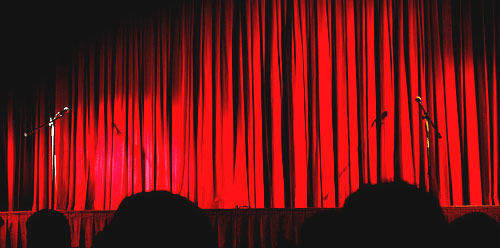
Stage: I look at the stage as being a big blank canvas (even with the set pieces on it). It's a small piece of imagination that humans have put together, through the vision and creativity of the many involved with a production. Something that I've always loved about theatre and film, is that it's a piece of imagination. Scientists can't see into your dreams, or your creative mind but through theatre/film, you can.

Andong: I went to Andong along with my theatre class in order to see 'Talchum.' A traditional Korean form of Mask Dancing originating from ancient times.
It was here where I found myself falling in love with the nature around me. I'm not a flower type of person, but if I've ever felt close to nature, it was here. Along with the dancing, I felt at peace with myself. The music that went along with the nature and dance that I was seeing and feeling around me made this an unforgettable experience.

The Last Days Of Judas Iscariot: First production that had an actual emotional effect on me. It was from this play where I realised that theatre had a lot to offer. Much more than what I initially thought. There was a moment in this play where the whole cast had cried together at a certain scene. This was the scene where Jesus (my character) was trying to get Judas to accept his love again, thus ending his time suffering. It was the first time I ever saw a cast get so emotionally attached into the production that they themselves were involved in. This was a remarkable yet unsettling experience further making me question the things that art has to offer within human life.
Thursday, 24 October 2013
Wednesday, 23 October 2013


Tuesday, 22 October 2013
Chad Austen
Mr. Austen was, interesting. I'm sure that I'll be sticking to what he told us about during Class that day, if I ever decide to audition for something outside.
It was cool to see how he knew what tricks there were behind auditioning, even down to the very fine details (looking at the ground right after being called up to speak).
It was cool to see how he knew what tricks there were behind auditioning, even down to the very fine details (looking at the ground right after being called up to speak).
Monday, 21 October 2013
Notes on Outline
Can't get to the object of your play unless you do a Theatre of the Absurd play
Notes on the Outline
Notes on the Outline
- Idea is that everybody is waiting
- is this actually an idea?
- used to be
- 'spend our whole lives waiting'
- anti-statement
- exceptions
- What are the characters doing
- consistency in the action
- by analysing characters, you'll see the idea
- Idea is action
- Crucible
- everything came to a head
- we had to make a decision
- emotions were high
- Play's title might just be a philosophical statement
- The last days of Judas Iscariot
- The Crucible
- The Good Soul of Szechuan
- The Doll's House
- Emphasis of the action
- where is it leading?
- what is the result of this action
- why does the main character do what he does?
- why does he choose the action he does over the other ideas?
- what is the most important thing to that character?
- what effect does that have on others
- Mis en Scene
- Example: Robert Wilson
- how much of the play is mis en scene?
- a lot of mis en scene
- Depends on the practitioner/play
- All going to have varying degrees on the focus
- Suzuki
- Motif is everything
- everything leads to your idea
- artists have some idea about something that he/she wants to communicate
- Tempo/mood in terms of action
- Dramatic action
- Dialogue/Monologue - any lines that are written
- critical to the characters/idea of the play
- Changing rates or beats of the dramatic action of the play
- Musicality/Rhythm
- Dramatic imagination
- Surges
- everything bursts out
- things turn
- You can even beat a play on a drum
- giving that scene a rhythm
- what beat would you beat out on a drum
- Sound and silence
- "A play is interrupted silence..." quote by french playwright
- "A good playwright will never ... he will punctuate it" - quote by another playwright
- A pause is messed up if it's too short or too long
- A play is like a dance/drama
- set to music
- listen to the breath
- listen to the break
- Mood effects the tone
- you can establish the mood by tone and music and lighting
Pitch Idea - Couldn't post it on the Google Doc
You’re in a pit, 5 feet deep with your feet suffocating under the muddy waters where you slept in the night before. Above you, are the cries of dying men and zips of light going at incredible speeds with bombs following in their presence.
The big bombs act as your blanket, covering you and your brothers in warm soil and boiling blood. You cower in your foxhole, waiting for the next bomb to go off that’ll make you think about the chances of the next one landing on your position.
You pick up your rifle and shoot it off into the distance, wondering whether or not you had just taken a man’s life. You feel somewhat safe, knowing that civilisation still exists back at home with your friends and families.
Knowing that your wife is having a nice coffee on the porch, reading about you and your brothers in the papers, wondering if you’re thinking about her as well.
You are dragged back into reality as a bomb goes off next to your foxhole.
Luckily, your head was down low smothering the bloodied soil.
Your partner next to you, isn’t so lucky though.
You see him coughing up blood, choking on it, spattering what seems to be words that seem foreign to you.
You keep his head low, making an effort to help him avoid something that’s inevitable.
You assure him, lie to him, tell him that everything will be fine, you know that this is not the case.
Look down, and then back up, just to see that his eyes have rolled back into his skull.
The screaming, has stopped.
You stop.
- I would have one actor sitting in front of the audience reading this poem
- The sounds would match the timing of when he would say things (Eg. bomb sound goes off when he mentions the shells raining down on the soldiers)
- Sand and mud fall from the ceiling - onto the actor
- wires from the ceiling are electric - shoot sparks when the gun sounds go off
- Silence - will be the key element - When the actor stops talking, everything stays silent
- The room will go black at once at various different times of the play - Audience will have no sense of where they are.
- The actor is free to move around behind the audience members
- No music - White noise.
- Simple lighting
TPPP - List of what I'm going to Include - Symbol of sleep
- Last Days of Judas Iscariot
- The Good Soul of Szechuan
- Mark Hill Workshop - Anne Bogart
- Romeo and Juliet
- 'V effect' - my challenges with this
Symbol: Sleep
Why sleep fascinates me so much is because it acts as proof to me, that the human mind also needs rest as well. A specific type of people that need to constantly be thinking, and alter who they are as people, are actors. To trick your mind into thinking that you are a totally different person with different emotions is something that I think sounds impossible, because it's still you. What actors do to get into their roles is something I find remarkable, and with sleep, I find that the more actors enshroud themselves within their roles, the more vivid their dreams start to become. I for one, am a victim of these vivid dreams. Sometimes the dreams become so vivid that I wake up and act upon whatever I feel is necessary based upon the dream, and this can sometimes be dangerous. Sleep, is somewhere that people can escape into, and it's proof that the human brain is a master of creativity as well. Even in sleep, we're ourselves, even when the brain opens up and creates a massive world, we still know who we are. So, how hard is it really, when actors need to take on the role of a character, and believe who they really are?
Monday, 14 October 2013
The Crucible Notes
- Given Circumstances:
- Roots of understanding -> previous action
- In Medias Rest
- Polar attitudes
- pendulum swings
- Characters are evil (most)
- Change -> beliefs and attitudes
- The way you've changed
- The way to see the play
- dramatic actions of the characters
- characters evolving
- Reactions
- Archetypes
- Dialogue
- helps you understand the setting
- facade
- 'Special World'
- creating a planet for your play
- creating a special world of isolation for your play
- Religious Beliefs
- Environmental situation
- Social environment
- Political environment
- Economic environment
- Geographical
- Time
Use the things in bold to strip the play down and to identify the key aspects easier
- Prejudices
- beliefs
- tolerance
- intolerance
- inner-environment of the play
- Characters may not change but the attitudes might change
Bill T Jones - BTB
“We can win.
We can lose.
We can fall down.
We can get up and do it over again, better.
We can go for it as if we have nothing to lose, knowing we have everything to lose.
...
We can tear up a dance floor and put it all back together again.
We can talk loud in public.
We can be fierce.
We can be small.
We can be mighty.
We can be too much.
We can be just enough, just in time.
We can.
We have to.”
Last Night On Earth
For some odd reason, this type of thinking makes me relate Jones to Jack White.
We can lose.
We can fall down.
We can get up and do it over again, better.
We can go for it as if we have nothing to lose, knowing we have everything to lose.
...
We can tear up a dance floor and put it all back together again.
We can talk loud in public.
We can be fierce.
We can be small.
We can be mighty.
We can be too much.
We can be just enough, just in time.
We can.
We have to.”
Last Night On Earth
For some odd reason, this type of thinking makes me relate Jones to Jack White.
Daniel Foley Blog
Mr. Foley's knowledge of stage choreography and vocal presence was intriguing. He helped me understand the importance of projecting the voice by stressing key words within a sentence "like a rocket shot from a ship a shore" --> Especially in Shakespearian plays, this is a technique that works well.
Doing the scene from Romeo and Juliet with Georgia in the middle of the room was really nerve-racking. However, despite the nervousness, he gave me a good piece of advice: "stop shaking your foot, or it'll make everyone dizzy."
Sunday, 13 October 2013
TPPP Analyzation
- the presentation was fluent
- many good points were made
- personal insights were given
- personal opinions were stated
- opinions were linked to what was being talked about
- good images were used
- there was almost no pausing/stuttering
- there were a lot of "um"s being used
- description of each point was thorough and detailed
- the symbol of the 'exhausted cat' didn't seem like such a good symbol to use
- the points were related to one another
Thursday, 10 October 2013
Wednesday, 2 October 2013
October 2nd BTB - King Lear
'King Lear'
King lear by Tadashi Suzuki received a lot of positive feedback as it was created to be 'unoriginal' and this supposedly made an unsettling feeling within the audience. There was a big sense of surrealism within the theatre as Suzuki's actors had successfully created the feeling of eeriness which made the production stick into the minds of their audience members, just that much more.
King lear by Tadashi Suzuki received a lot of positive feedback as it was created to be 'unoriginal' and this supposedly made an unsettling feeling within the audience. There was a big sense of surrealism within the theatre as Suzuki's actors had successfully created the feeling of eeriness which made the production stick into the minds of their audience members, just that much more.
Monday, 23 September 2013


Sunday, 1 September 2013
Sunday, 18 August 2013
Why Theatre?
Theatre is a way in-which one can measure the amount of life experiences that they've gone through. My father claims that the thing called 'acting' isn't something real. He claims that characters and roles are just capsules into what we see as
A Manifesto
You
are what you turn out to be. The end result will be God’s finished painting of
you.
Live
life to its boundaries, yet don’t excel out of them.
For
it’s the person with the hungriest of hearts that will get to where they
want to be.
Live
life up to his name, and for his glory, and then the hunger will pass.
But, don't be blinded.
KNow when you start levitating off the ground, and root yourself back down with the weights of the world acting as your anchor anchoring you down.
Do as you wish, for none of us will know what the eye of the beholder is holding, except for you.
KNow when you start levitating off the ground, and root yourself back down with the weights of the world acting as your anchor anchoring you down.
Do as you wish, for none of us will know what the eye of the beholder is holding, except for you.
Waves of Euphoria will shower over the ones that give life to others.
The
pain that you undergo in life, should be cherished, as those will be your
building blocks into God’s plan.
Although
the pain might sting, time will be your friend, as it will heal all wounds.
What
is meant to be will not always be in your favour, so don’t have any
expectations.
Expectation can be the soil of greed and hunger
If too many expectations are made.
Thursday, 23 May 2013
Bunraku
- large human like puppets that require multiple operators
- facial expressions
- smooth, human like movements
- chanter
- sings all of the songs
- says all the voices of the characters
- musician
- shamisen
- japanese lute
- Biwa
- original instrument that would be biwa
- played during chats in the eleventh century
- shamisen
- more harmonious and smoother
- sawazumi kenkyo or takino koto
- blind monks
- first switched
- old joruri
- kimpira
- violent satsuma joun
- Uji kaga no jo
- the bridge between old and new joruri
- structural changes
- New joruri
- takemoto gidayu
- opened a theatre in osaka in 1684
- focused more on the chanters
- three different roles
- head operator head and right hand
- left hand operator
- feet operator
- operators should be anonymous
- unnoticed
- merely and extension of the puppet
- kimonos and cotton padding used for the costumes
- affects puppet's movement
- male characters: cotton padding to create the stomach area, kimono is draped to make belly bulge out more
- female puppets: cotton to create the roundness of the bust and hips.
- hole in the back of the kimono for the puppeteers to control the head and legs
- puppet heads have special features
- puppet wigs are made out of human hair or animal hair
Kyogen
- Both noh, through ti's persuit of a symbolic ideal beauty, and kyogen through it's realistic expression of humor, portray the true essence of human nature, and have been passed down to us today in these mutually complementary roles.
- Wild, precious words - kyogen
- developed alongside noh theatre
- over exaggerated movements
- themes: working class, the things that they go through in their day-to-day lives
- Morumachi period
- speech and dialect
- dishonesty, sympathy
- Zengaku entered japan during the nara period
- direct storyline and script used
- polished wood floor, raised from the audience
- any place on the stage can become a 'place'
- minimal props, no stage equipment, no fancy things
- backdrop of hand-painted pine trees
- Green room where the actor is in isolation and calmness before they go on stage
- announcement of who you are when you get up on stage
- movement styles - gliding walk
- your centre is the hara
- role of stillness, minimalism
- completely choreographed to perfection
- nowadays, you have a set of strict gestures
- all movement comes from a place of stillness
- dialogue is always done closer to the audience
- they don't use masks as much
- instead of masks they use make-up
- strict separation of actors and chorus.
Tuesday, 21 May 2013
the more i think the more i just want to sleep.
i really want to act
acting kinda frees you in a sense. the euphoric feeling you get is so addictive
this world faces the troubles that <> we face troubles in this world
theres so much hatred and anger, love can't really be real, and why does it even exist if it isn't gonna last
why do we exist if we're not gonna last
we all try to pitch in
to the big pit
of accomplishments when reaaly
wer'e just getting
closer and closer to
our
ends.
Tadashi Suzuki
- Revolutionary theatre practitioner
- no apprentices
- doesn't show people about his theories
- Suzuki company - Toga in Toyama Japan
- Writer of "The ways of Acting"
- Famous for directing classical work such as shakespearian plays
- Focus on mental and physical techniques on Suzuki's theories
- to act, one must have a point of view
- convey a point of view, from human behaviour and relationships
- once actors perceive this, they try to stimulate this by relating to the text
- By expanding the process of energy, you can make the centre of the body be the focus of your balance, on ur breathing abilities and such.
- more body awareness
- more movement
- Things that are invisible, they are working on
- all about coming back into the centre of things
- Lose yourself through fiction
- breathe trhough the nose
- understand the different ways in which teh feet contact the floor
- send energy through the floor onto the ground when stomping
- keep the upper body free but strong
- constant focus and awareness
- keep the lower body constantly engaged and powerful underneath the centre of gravity to support the breath and vocal instrument.
- The ten ways of walking: Stamping Shakuhachi
- move from the centre, no changes in direction
- no fixed path until the group comes together in a line
- Standing statues
- rising up from the floor, in the middle of stomping shakuhachi
- frozen poses
- sitting statues
- legs stretched out straight in the front
- Decrease in communication, decrease in theatrical appreciation
- non-places
- cultures can co-exist, with theatre and acting as it's bridge
- Dynamic locations
- wants actors to experience
- Audience and Actor Releationship
- wants to create the flow of communication
- wants actors to feel at home, and not feel threatened by outside factors
- Tale of King Lear
- Asian influence Globally
- Philosophy of Tadashi Suzuki
Monday, 20 May 2013
Japanese Theatre NOtes
- Japanese theatre is a living theatre
- Amazing
- Passed down traditions from generation to generation
- bunraku, noh theatre, etc...
- In what ways are these forms reactions to traditional theatre?
- Apply it to non-traditional forms
- training forms
- Mishima Yukio
- produced 13 noh plays, in a modern theatre setting
- Single Sex Plays
- Kabuki theatre only started off with women
- Transformed into prostitution
- Wasn't about the plays anymore, it was about the nudity
- 1470 full-fledged theatre
- 14th century prior - literature, dance, artforms
- recognition of theatre form in art
- all artforms became a part of theatre
- Characteristics
- text speaks itself - not ordinary dialogue
- fluid narrative stance - break the speeches up - not logical narrative story
- Aesthetics are key
- flexibility of time and space - time can be shifted to match the play - common sets used for symbolism - scenes are created with off-stage areas - Hanamichi ramp set runs into the audience
- centrality of form - movement, texts, costumes, music are not for pragmatic purposes - used for aesthetic purposes (as stated before in point 2) - Eg, old man traits are represented by taking the most beautiful aspects of old men and showing them
- Concealing of the tearful eye
- Bunraku - weekping puppets bite sleeves (shaking) to show crying
- Kakegi
- Recognition through widespread use - musical patterns
- The people Vary speed, timing, intensity, design, colour
- Mastery of form and training
- Question of interpretation - you have to go a long way before you can do this
- To rehearse at the very end - Kabuki
- Form diminishes interest in verisimilitude - The element or aspects of reality that you evoke through the actions of reality. - Eg, good sci-fi writers are good at verisimilitude (random things that are made)
- Intensity of intertexuality
- theatrical mechanics of theatre
- Originality Vs Traditional form
- Traditional japanese theatre is where fluid transitions between time space character...
- Traditional japanese theatre is presentational theatre vs representational theatre
Sunday, 19 May 2013
Saturday, 11 May 2013
Presentation NOtes
George:
Use of projections on back walls
Video clips of war, life, youtube videos all in the background
Human perception
4 actors
Each have a neutral mask on
Georgia:
Levels of elevation have correlation with the levels of sadness
Emma:
Focusing on the image of a circle
Commedia and Talchum
Masks are shaped looking upwards
Sabrina:
based on the only tribe
temperature-sensitive paint - white to black - to show the corruption in the only tribe
really long dress for the significant character
Austin:
"who is truly blind?"
Joel:
masks with no meaning
nobody is truly distinctive
Samuel:
'solitude'
-great story.
Justin:
cavemen age
very 'gutteral'
in the woods
somewhere with a cave
Christian:
My mask performance is based on the reality of love, and how that can change a person for the worse. the dancers are trying to find each other through the whole dance, and the dancers that start in the water can only stay in the water, while the dry dancers are trying to avoid it.
Use of projections on back walls
Video clips of war, life, youtube videos all in the background
Human perception
4 actors
Each have a neutral mask on
Georgia:
Levels of elevation have correlation with the levels of sadness
Emma:
Focusing on the image of a circle
Commedia and Talchum
Masks are shaped looking upwards
Sabrina:
based on the only tribe
temperature-sensitive paint - white to black - to show the corruption in the only tribe
really long dress for the significant character
Austin:
"who is truly blind?"
Joel:
masks with no meaning
nobody is truly distinctive
Samuel:
'solitude'
-great story.
Justin:
cavemen age
very 'gutteral'
in the woods
somewhere with a cave
Christian:
My mask performance is based on the reality of love, and how that can change a person for the worse. the dancers are trying to find each other through the whole dance, and the dancers that start in the water can only stay in the water, while the dry dancers are trying to avoid it.
Tuesday, 23 April 2013
- Ritual and religious beliefs
- same with korean theatre
- Myths made through unexplainable theories
- Odyssey
- Epic theatre
- Origin of theatre was made through aristotle
- greek philosophy
- human beings are instinctively imitative
- people are born to imitate
- Enjoy seeing/imitating others
- humans want to know why we act as we do
- Children imitate adults through instinct
- Drama appeared 3000 bc in Egypt (speculation)
- Party God
- Myths about Dionysus
- Harmony with forces made through theatre
- 14th century bc was when they had these festivals
- dances - 'Dithyrambs'
- 534 BC
- contest of theatre
- started with tragedy, then went to comedy
- Only recorded actor was thespus
- Won the first contest at the festival
- thespians - actors
- Chorus is the unifying force of the act
- 5 writers that were the key playwrites
- aristopheles
- mynander
- sopholes
- euripides
- Esculus - earliest dramatist whos play survived
- 79 plays made yet only 7 remain
- 'Persians' - play
- most of these plays were made upon Gods
- mythology
- mythological stories of the Gods
- Introduced the second actor
- face-to-face conflict
- Oresteiai
- one of the great examples of dramatic literature
- dealt with Justice
- Sophecles
- 496-406 bc
- one of the greatest of the greek dramatists
- 100 plays made but only 7 exist
- Antigony
- concerned with human relationships
- Breeks believed that spirites would never cross the boundary to rest if they weren't buried properly
- Chorus with one person
- chorus like a narrator
- based on a greek chorus
- Euripides
- Meidas - play
- was a skeptic about Gods and stories
- examined his characters
- Trojan women - killed children
- The Trojan Women - play
- Coregoy
- wealthy citizens that payed for the chorus
- sponsors
- Coregus
- appointed to each dramatist
- individual who worked with everybody
- responsible for everything
- except for the speaking itself and the actor
- The medieval theatre was sponsored by the craft guilds
- iron workers (like donating wagons)
- Choregus had to make sure that the playwrite had 3 tragedies and a comedy
- The dancing place (performance area)
- Skene
- where actors would prepare (like a backstage)
- side buildings (paraskenia)
- Paradoi - where the chorus comes in between the stage and the audience
- Duasseks Machinne
- crane-like device
- lower and lift the gods
- Characteristics of a greek actor
- loud voice
- versitile
- different masks
- how to use a mask
- dance
- singing
- they wore huge heels and tunics
- abstract motions
- no small gestures
- big motions
- Characteristics of a Greek Chorus
- unifying force
- Commentary of action on a play
- engage in dialogue
- express opinions
- give advice
- established an ethical framework in a play
- set up a standard
- react to situations
- adding dramaticness
- add colour
- rhythmical functions
- rhythm to the play
- Elements of Tragedy
- fate trumps anything
- kills his own father and has children with his mother
- fate told him to do so
Sunday, 14 April 2013
Love of Three Oranges
The way in-which that the play is not modernised
- Written in a very modern tone (in that, it is not written in a shakespearian tone)
- Commedia seems to kill the feeling of it being and old play/story through the use of modernised humor and 'goofy' moments.
- The stylistic abnormalities of commedia proves to invoke a sense of randomness into the story, as there are obvious (humoros) elements that the readers/audience should be able to point out towards.
- The way that the play carries itself through in a faster pace makes it seem delve towards the more conventional aspects of a modernised play.
- It is a known fact that most of the films and scripts that are made in today's world, seem to use more body language and physicality, rather than using the power of words to convey messages.
- I personally believe that this is a bad thing.
- Commedia helps induce this tone of having more physical movements than actual speech, by having the characters jumping and showing their character's traits through the use of movement.
Wednesday, 3 April 2013
Mask that I would want to Create
A mask that I would want to create right now would have the characteristics of a wolf, or a lion. I'm fixated on nature and the interaction between animals, but i'm mostly interested in the canine family. The way that they hunt in packs and fight other packs of dogs for food makes life seem so interesting. There's that un-detectable line of communication that they have with the world around them. I think that a masked theatre performance dealing with speech through movement would be such a cool idea.
Monday, 1 April 2013
Commedia Del'arte
- Everybody was on the same level, when behind 'the mask'
- "Give a hypocrite a mask to wear, and he will be rendered incapable of further lying"
- 16th century
- masters of improvisation rooted in physical training
- One stock character per actor (archetypes)
- improvise around scenarios embellis basic plot outlines with physical routine known as LAZZI
- Virutoso linguistic digressions (verbal riffs of standup comedians)
- "A model for improvisatory and movement orientated performance."
- Actor centered theatre (acrobatics, body training, improvisation ensemble, and staging techniques)
- Street psychology
- Through comedy, we can glimpse tragedy (Charlie Chaplin)
- buster keaton, laurel and hardy, marx brothers
- Le jeu of Lecoq
- Driving force is not what to play but how it should be played.
- Four principles for commedia actors
- stillness
- awareness
- communication with the audeince
- ability to express feelings and thought through body
- Never touch the mask
- makes it look unreal
- Present an illusion
- Qualities of Commedia Del'arte
- Willingness to work as a team
- seize the moment of opportunity
- ability to act with truth and sincerity Grantham
- Pantalone
- middle aged man
- greedy
- miserly/protective of money
- husband deceived from a young wife
- competes with his son
- overly protective father guarding his young daughter from suitors
- like a chicken
- Dottore - pig
- elderly gentleman
- law professor
- sometimes a rival with pantalone
- lacks common sense
- good with double talk and jargon
- stutterer like priest in princess bride
- thinks out loud
- big
- studies a lot yet knows so little
- Arlecchino/Harlequin
- clever
- perceiver
- illiterate
- good schemer
- he is a Zanni
- curious of things
- agile
- stupid but has grace
- not really evil, but mischievous
- shape shifter
- never thinks about consequences
- Zanni
- proto clowns
- like animals
- always sleepy or hungry
- pre verbal
- Innamorati/innamoratae
- less creature-like
- beautifully dressed young lovers
- speak refined language
- no mask/ lead with chest, parody of ballet, use breath and points of lightness
- always in-love
- high status
- Capitano
- peacock
- bloodhound/mastiff
- boastful, woardly spaniard who brags of battles he never fought
- Pulcinella
- hump-backed
- doltish male character
- Pedrolino
- 'perrot'
- awkward
- simple
- tense
- effeminate
- devil wears prada stanley tucci
- cuckolded
- Scaramuccia
- mustached servant
- sometimes clever
- sometimes cruel
- Senora - no mask
- bossy
- bawdy
- offers herself in exchange for money/high status
- vain
- proud
- goes after men
- forever 29 years old
- Fontesca/columbina/clarice-fox
- serving maid
- clever
- high spirited flirt
- often moving
- maid of the innamoratae
- corresponded with alecchino
- ballet-like movement
- carried a basket and sometimes a tambourine
- Working with the mask
- cheat up (put head up)
- use physical characteristics of the mask
- (if you have a big nose do it with a lot of rooster)
- make the mask come alive
- don't touch the mask
- highlights the fact that it is not real
- don't be subtle
- Scapino
- rasclaly
- confused by everything
- falls in love for the fun of it
- flippant about love
- never deeply evolved
- obeys every impulse that he feels
- forgets a lot
- has a hate towards men
- Barghella
- cunning
- corrupt
- fear/maniupulation
- knows weak points
- exploits
- never a victim
- like a boss of the Zanni
- Lazzi
- conversations
- little comic interludes
- moments of humor grabbed between scenes/during scenes
- something foolish/witty/metaphorical in word or action
- stage tricks
- comic stage business
- comic routines planned or unplanned that could be performed in any one of dozens on plays.
Subscribe to:
Comments (Atom)